

Burnt plastic deposits in the dead zones of a plasticizing screw
causes, effects, and solutions
Burnt plastic deposits in the dead zones of a plasticizing screw (e.g., in the injection molding or extrusion process) are a common quality problem. They are caused by thermal decomposition of the plastic melt, which remains too long in areas with poor flow, resulting in black specks (carbonized particles), streaks, or burns in the component.
Causes of the burnt plastic deposits
A dead zone describes an area in the plasticizing system where the polymer is only minimally moved (resulting in a long residence time) and is thermally overloaded.
Typical locations:
- Screw base
- Dead spaces behind non-return valve
- Dead spaces in mixing and shearing segments
- Wear areas on the screw and barrel
- Production interruptions without temperature reduction
Material remains in these zones many times longer. The result is burnt plastic deposits that first build up in layers and later detach uncontrollably and are carried away by the flowing melt. Ultimately, they end up in the plastic molded part, which is then unusable.
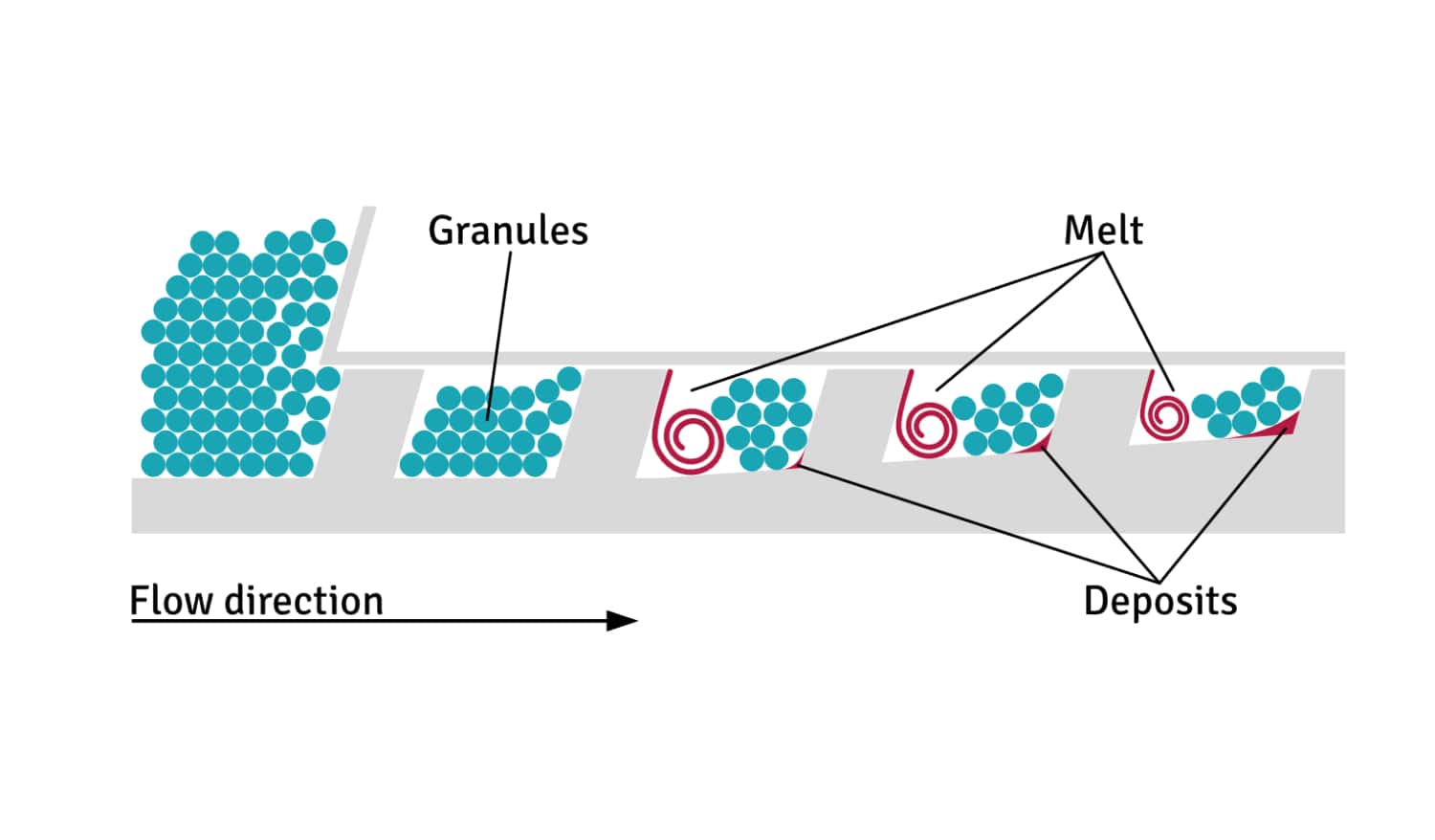
Effects in the plasticizing screw
Insufficient cleaned dead zones can lead to the following problems:
- Black spots in the component (black specks/carbonization)
- Streaking
- Pressure peaks due to blocked hot runner nozzles
- Mechanical weakening of the component
- Increased scrap production
- Increased machine downtime
Existing deposits/carbonization locally change the flow. This in turn leads to further dead zones and exponential deposit growth.
Solutions against black specks in plastic
Mechanical cleaning of the plasticizing screw is very time-consuming and costly because it has to be removed. These costs can be saved by cleaning the plasticizing system with cleaning concentrates/cleaning granulates from ver-rus. Chemicals penetrate the deposits, break them up from the inside, loosen them from the metal surfaces, and then purge them out. The following options are currently used:
- Regular cleaning with cleaning concentrates/cleaning granulates (most cost-effective)
- Mechanical cleaning of the screw by removal (most cost-intensive method)
- Temperature reduction during production stoppages
- Emptying the machine during production stoppages
- Checking the wear condition
- Adjusting the screw speed
Conclusion
Dead zones in the plasticizing screw are an often underestimated cause of quality problems in plastics processing. Targeted cleaning procedures, regular maintenance, and optimized process control can minimize deposits and increase production reliability.
Structured cleaning management saves costs, reduces scrap and significantly extends the service life of the plasticizing unit. Contact us: we provide comprehensive support, from process analysis and geometric evaluation of your system to targeted cleaning.